
Retinol
Retinol is a vitamin A derivative and one of the most researched actives in skincare. It works by accelerating cell turnover and stimulating collagen production, which over time helps fade fine lines, smooth uneven texture, and fade post-acne dark spots.
Retinol suits most adults concerned with early signs of aging, dullness, or persistent breakouts, but it requires a slow introduction. Start with a low concentration (0.025–0.1%) once or twice a week at night, always followed by SPF during the day. Pregnant or nursing individuals should avoid it entirely and consult a dermatologist about alternatives.
Best Retinol picks
Top-reviewed formulas featuring this ingredient.









Guides about Retinol
Snail Mucin Pairings: What to Layer for Glass Skin
Snail mucin plays well with niacinamide, hyaluronic acid, vitamin C, and retinol, here's how to layer each correctly, and what to skip.
Read → SerumsHyaluronic Acid: The Best Ingredients to Pair It With
A practical guide to layering hyaluronic acid with niacinamide, vitamin C, and retinol, plus what to avoid and where it fits in your routine.
Read → SerumsRetinol Pairing Guide: How to Layer It Safely
The ingredients that work best with retinol, the ones to keep separate, and exactly where retinol slots into your PM routine.
Read →Retinol: frequently asked questions
What will retinol do for your skin?
Retinol is a vitamin A derivative that speeds up cell turnover and prompts the skin to produce more collagen. With consistent use, it can visibly reduce fine lines, smooth uneven texture, and fade dark spots. It's one of the most research-backed over-the-counter actives available.
Results aren't immediate, most people need 8–12 weeks before noticing meaningful change. A formula like Neutrogena Rapid Wrinkle Repair Retinol Face Moisturizer is a widely used starting point.
Is vitamin A the same as retinol?
Retinol is one specific form of vitamin A. The broader vitamin A family, collectively called retinoids, spans a range from mild retinyl esters to prescription-strength retinoic acid (tretinoin). Retinol sits in the middle: more potent than esters, gentler than tretinoin.
After absorption, skin enzymes convert retinol into retinoic acid, which is what actually triggers cellular changes. That conversion step is why OTC retinol works more gradually than a prescription.
Can you use retinol daily on your face?
Eventually, yes, but starting daily is a common mistake. Most skin-care professionals recommend beginning two or three nights a week, then increasing frequency once your skin adapts. Jumping in too fast often causes dryness, flaking, and redness that many people mistake for a reaction to the ingredient itself.
Always apply retinol at night, since it can degrade in sunlight, and follow with a moisturizer to minimize irritation.
What's the difference between a retinol serum and a retinol cream?
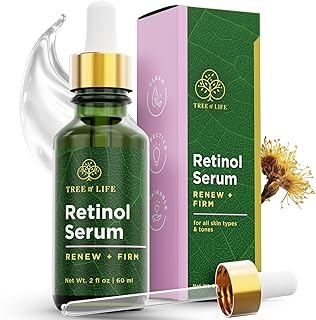
The base formula affects both texture and how your skin tolerates it. Serums absorb quickly and layer well under moisturizer, a good fit if you prefer lightweight products or already use multiple actives. The Tree of Life Retinol Serum with Hyaluronic Acid pairs retinol with a hydrating ingredient to offset dryness.
Creams combine retinol with emollients in one step, which can buffer irritation, useful for drier or more sensitive skin types.
How long does retinol take to show results?
Skin cell turnover takes roughly 28 days, so visible improvement in texture and fine lines typically requires at least 8–12 weeks of regular use. Hyperpigmentation and dark spots usually respond more slowly, expect four to six months for meaningful fading.
Consistency matters more than concentration. Using a lower-strength formula three nights a week without skipping beats a higher-strength one used sporadically.
Does Elizabeth Arden make a retinol product?
Yes. Elizabeth Arden offers retinol through its Retinol Ceramide Capsules line, single-dose capsules designed to keep retinol stable until application. They're a legitimate option, though not currently in our catalog.
If you're looking for an accessible retinol serum, the Eclat Renewing Retinol Serum with Hyaluronic Acid & Aloe Vera pairs the active with soothing ingredients that help reduce the adjustment-period irritation many beginners experience.